
How Long Does Oxycodone Stay in Your System?
%20(1).avif)

Table of Contents
On average, oxycodone stays active for a few hours. But it can show up in drug tests for longer.
Oxycodone is an opioid painkiller found in brand-name drugs like OxyContin.
The average dose of oxycodone remains active between three and six hours. After that point, it is broken down by the liver into metabolites that are inactive. Even though these metabolites are inactive, they can be detected in the blood and urine usually for several days after use.
Here's what you need to know about how the body processes oxycodone and how long it might show up on drug tests:
How Does Your Body Process Oxycodone?
Oxycodone is designed to be ingested in pill form. Once it is ingested, it is absorbed through the GI tract and is processed through the liver. It then enters the blood stream to exert its effects. After this it is further processed by the liver into inactive metabolites. These metabolites are excreted by the kidneys and into the urine over the next several days.
Oxycodone's half-life (or the time frame required to process half of a dose) is about three hours.[1] Usually people can feel the effects of a drug for one or two half lives. This means that the effects of oxycodone last somewhere between 3-6 hours, but may last less or more time in certain individuals depending on how rapidly they metabolize medications.
Oxycodone’s Duration by Ingestion Type
Researchers say the following time frames are common:[2]
- Swallowing oxycodone: About 6 hours
- Snorting oxycodone: About 3 hours
- Injecting oxycodone: About 3 hours
You may feel oxycodone for longer or shorter periods than specified here. Each person’s body is different, and some people naturally eliminate the drug quicker or more slowly than others. If you have certain conditions or take certain other medications, your body might take less or more time to process the drug.
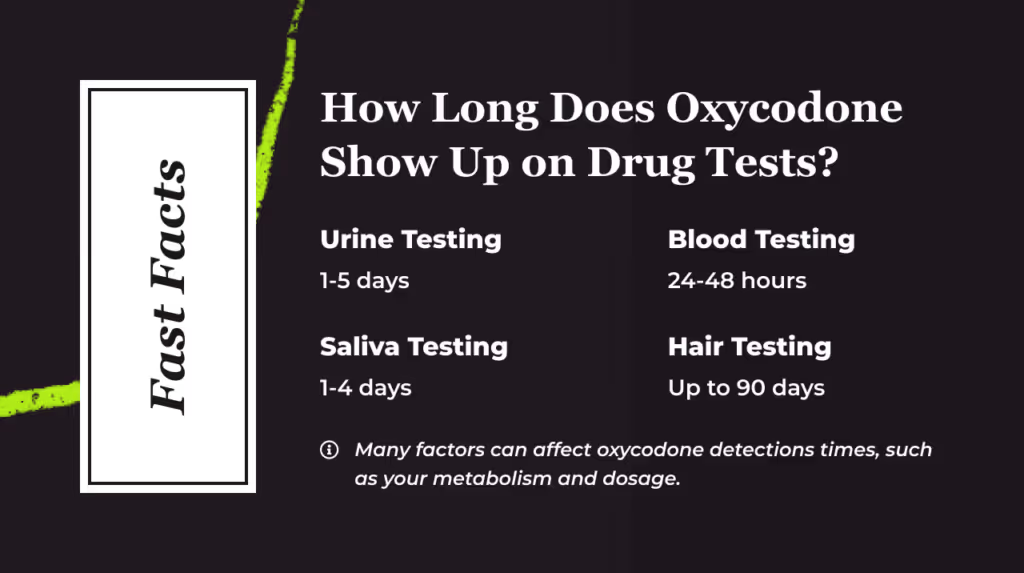
How Long Does Oxycodone Show Up on Drug Tests?
Most employers and doctors use a urine drug screen to test for various substances, including opioids. Time frames vary but in general, oral oxycodone can be detected in the urine between 3-5 days after last use.
Some factors can impact the length of drug detectability, including the following:[4]
- Duration of use: The longer your drug habit, the more metabolites your body stores within your cells. People who've used oxycodone for long periods may stay positive on their drug test longer.
- Average dose: If you take a large daily amount of oxycodone, your body may process it more slowly, which can increase the time a drug test will stay positive.
- Metabolism: Some people process the drug quicker than others due to genetics. Poor overall health can slow your metabolism too.
In general, if you're using oxycodone regularly, expect it to appear on drug tests. If you have a legitimate prescription for the drug, tell the testing team, and ask for documentation from your prescribing doctor that you are taking this medication.
For people who are having trouble discontinuing oxycodone use, medications are available that can help. Medication assisted treatment (MAT) is an available treatment option for anyone struggling with an opioid use disorder.
Bicycle Health uses telemedicine to bring MAT to you. Contact us to find out more.
- Oxycodone
Elena Hill, MD, MPH
Elena Hill, MD; MPH received her MD and Masters of Public Health degrees at Tufts Medical School and completed her family medicine residency at Boston Medical Center. She is currently an attending physician at Bronxcare Health Systems in the Bronx, NY where she works as a primary care physician as well as part time in pain management and integrated health. Her clinical interests include underserved health care, chronic pain and integrated/alternative health.
Sources
- OxyContin Product Information. Therapeutic Goods Administration. https://www.tga.gov.au/sites/default/files/foi-1299-83.pdf. July 1999. Accessed April 2023.
- Pharmacokinetics of Intranasal Crushed OxyContin and Intravenous Oxycodone in Nondependent Prescription Opioid Abusers. Journal of Clinical Pharmacology. https://www.ncbi.nlm.nih.gov/pmc/articles/PMC4006196/. May 2014. Accessed April 2023.
- Opioid Testing. Testing. https://www.testing.com/tests/opioid-drug-test/. September 2022. Accessed April 2023.
- More FAQs About Opioids. National Institute on Drug Abuse. https://nida.nih.gov/publications/opioid-facts-teens/more-faqs-about-opioids. July 2018. Accessed April 2023.